

Dear Friends,
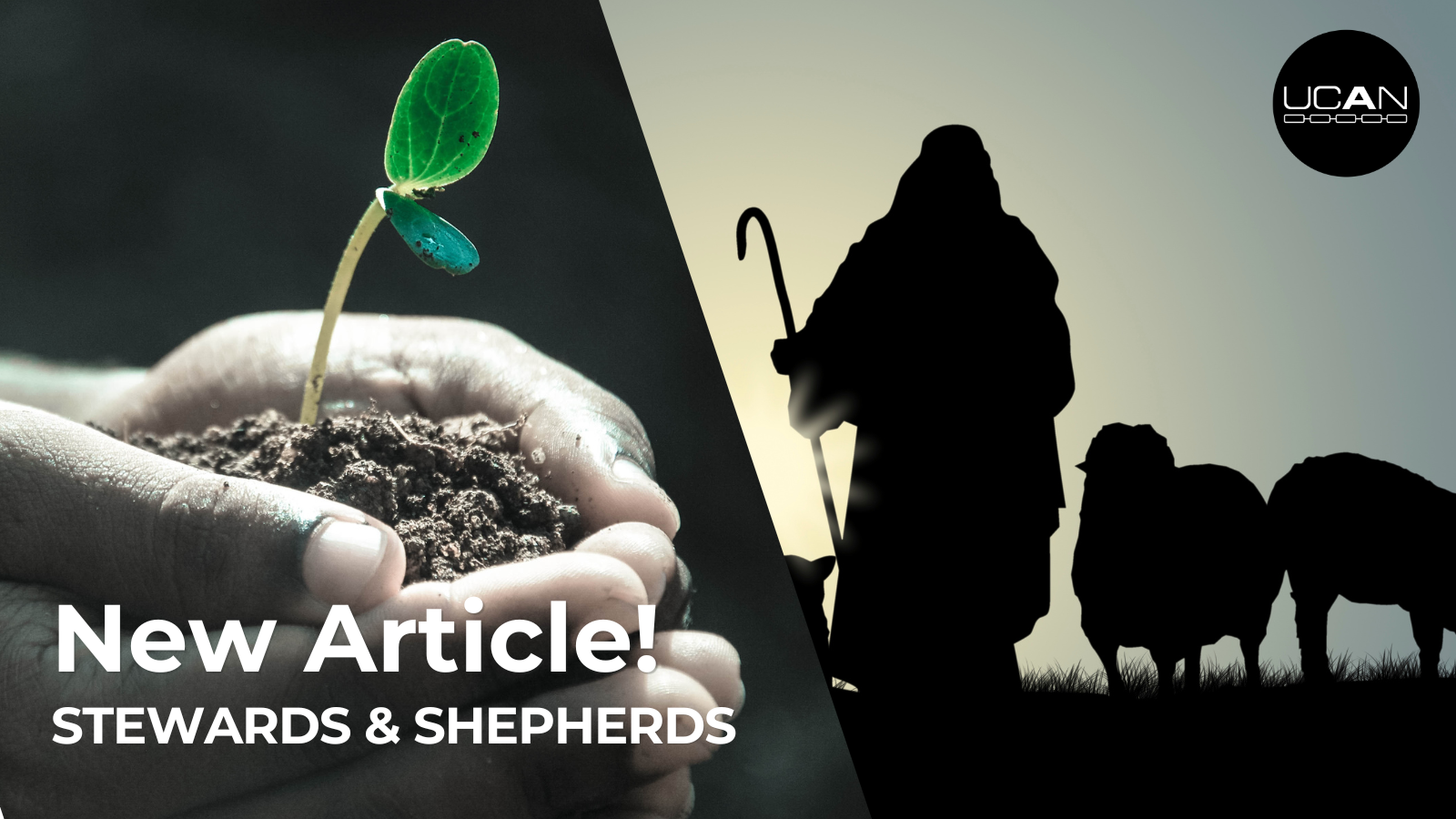
Church life is made up of many different gifts, callings and responsibilities. Among the several pictures the Bible gives us of faithful service, two stand out in particular: the steward and the shepherd. Both describe not positions of power, but roles of trust and care.
Some spend their days looking after governance, finances and buildings. Others are more focused on pastoral care, teaching and discipleship. Yet many of us, particularly those serving in church administration and management, spend our time helping these two aspects of church life work together. We support wise decision making while never losing sight of the people those decisions affect. In many ways, we have the privilege of standing in the space between stewardship and shepherding.
In Luke's Gospel, Jesus asks:
"Who then is the faithful and wise manager, whom the master puts in charge of his servants?" (Luke 12:42)
Paul echoes this in 1 Corinthians 4:1-2:
"This is how one should regard us: as servants of Christ and stewards of the mysteries of God. Moreover, it is required of stewards that they be found faithful."
A steward manages something valuable that is not their own. Whether we oversee budgets, buildings, policies, volunteers, rotas or the day to day running of church life, everything we care for belongs first to God. Faithfulness, not visibility or status, is the measure of success. When we see ourselves as fellow stewards rather than competitors, we create a culture of shared responsibility instead of individual control.
Alongside this picture of stewardship, Scripture also speaks of shepherds.
Through the prophet Jeremiah, God promises:
"I will give you shepherds after my own heart, who will lead you with knowledge and understanding." (Jeremiah 3:15)
Peter later encourages church leaders:
"Shepherd the flock of God that is among you, not under compulsion, but willingly, as God would have you... not domineering over those in your charge, but being examples to the flock." (1 Peter 5:2-3)
The shepherds of the Bible knew their sheep by name. They listened, guided and protected them. While Peter's words were written to church leaders, they remind all of us that every policy, meeting, budget and process ultimately exists to serve people. Leadership relationships flourish when we lead with gentleness, humility and a willingness to listen.
When we combine these two biblical pictures, stewardship focuses on what has been entrusted to us, while shepherding focuses on who has been entrusted to us. Together they remind us that leadership is neither ownership nor dominance. It is serving under the Chief Shepherd, Jesus Christ.
If we want stronger relationships across our churches, we can all play our part. We can practise mutual accountability by being honest with one another. We can pray for and encourage those leading and serving alongside us. We can lead with humility, recognising that none of us carries the whole picture of God's work.
Each of us, whether administrator, manager, trustee, minister or volunteer, has been entrusted with a part of God's work. None of us holds the whole. As we serve together, valuing trust over titles and people over projects, the Church becomes a living picture of Jesus, who came "not to be served but to serve."
As another season of ministry unfolds, may God help each of us to be faithful stewards of what He has entrusted to us and to care for those around us with the heart of a shepherd. As we work together, may our churches become places where wise governance and compassionate ministry are not seen as separate callings, but as two expressions of the same faithful service to Christ, the greatest servant leader.
Yours in Christ
Jon Drayton
UCAN Manager Member
Do you have an encouragement to give or an interesting story about church administration to share? We'd love to hear from you and share more voices from the UCAN community. Get in touch with us via info@churchadministrators.net for more details!